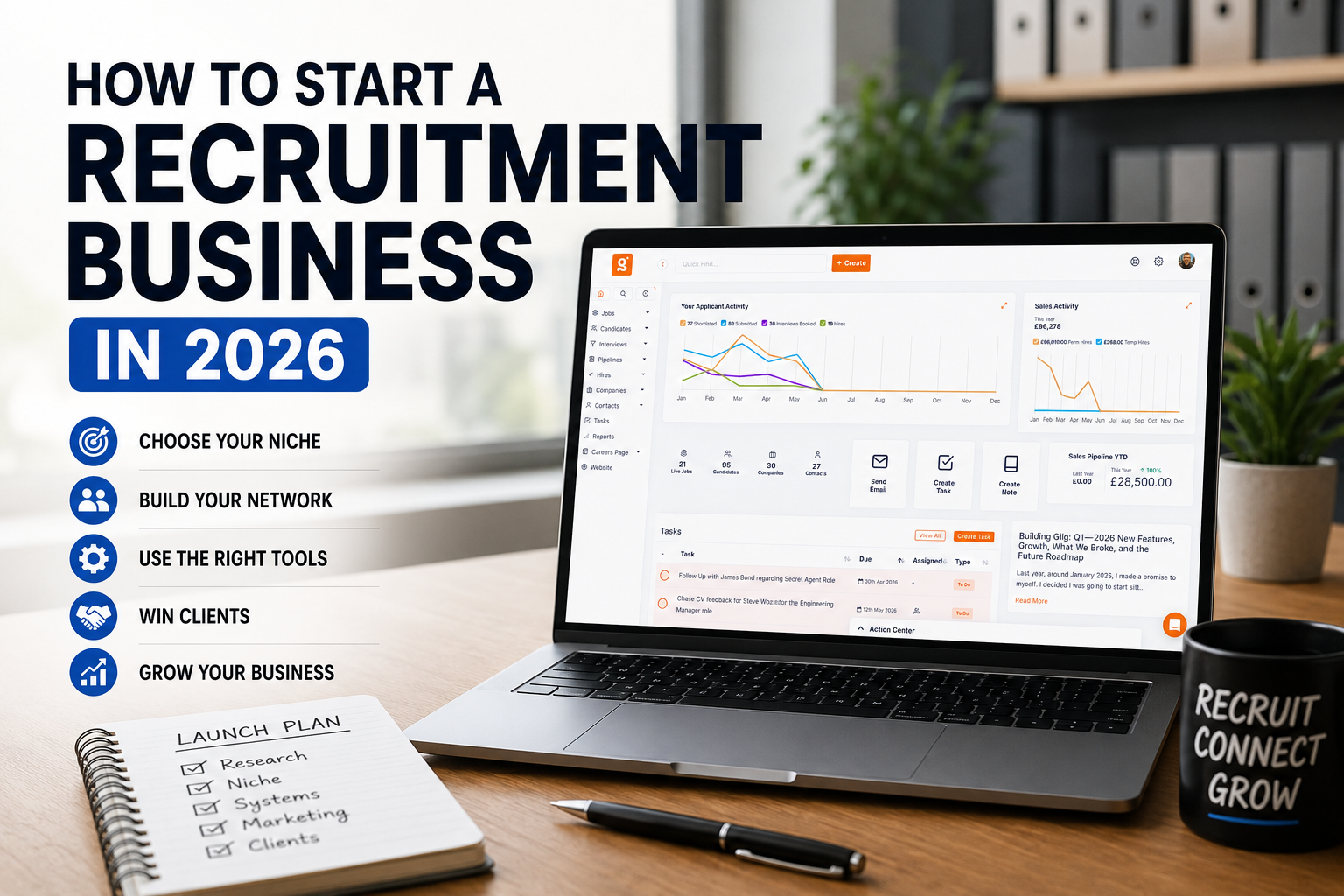
Starting a recruitment business can be one of the most rewarding ways to build a scalable company with relatively low start-up costs.
You don’t need a warehouse. You don’t need stock. In many cases, you don’t even need an office.
What you do need is a process, consistency, and the ability to build relationships.
The recruitment industry has changed massively over the last few years. Agencies are now launching remotely, using AI-powered recruitment software, automating admin tasks, and competing with much larger businesses from day one.
That’s exactly why more recruiters are deciding to go alone and build something for themselves.
In this guide, we’ll break down how to start a recruitment business in 2026, what you actually need to get started, and the mistakes new agency owners should avoid.
Why Start a Recruitment Business?
Recruitment remains one of the few industries where you can realistically launch a business with very little upfront investment.
Many successful recruitment agencies started with:
- One laptop
- LinkedIn
- A CRM
- Existing relationships
- A niche market
The biggest advantage recruitment has over many other industries is that you are selling knowledge and network rather than physical products.
If you already have recruitment experience, industry contacts, or a specialist market you understand well, you are already ahead of most people starting a business.
Step 1: Choose Your Recruitment Niche
One of the biggest mistakes new agencies make is trying to recruit for everything.
The more specific your niche is, the easier it becomes to:
- Build credibility
- Rank on Google
- Generate referrals
- Understand client pain points
- Stand out against larger agencies
For example:
- Construction recruitment
- Healthcare recruitment
- Tech recruitment
- Driving recruitment
- Renewable energy recruitment
Specialisation is often what allows smaller agencies to compete with larger established businesses.
Step 2: Register Your Recruitment Business
Before trading, you’ll need to set up the legal side of the business.
This usually includes:
- Registering a limited company
- Setting up a business bank account
- Getting recruitment terms in place
- Registering with HMRC
- Sorting insurance
Depending on your sector, you may also need compliance processes in place for things like right-to-work checks and data protection.
Many start-up agencies choose to keep costs low initially and operate remotely.
Step 3: Invest in Recruitment Software Early
One of the most important decisions you’ll make is choosing the right recruitment software.
Trying to manage candidates using spreadsheets and inbox folders becomes a nightmare very quickly.
A modern recruitment CRM should help you:
- Track candidates
- Manage jobs
- Store client data
- Search CVs quickly
- Automate admin
- Keep recruitment workflows organised
Using the right software early can save hundreds of hours as your business grows.
At Giig Hire, we designed the CRM with growing recruitment businesses in mind. Whether you are launching solo or building a small team, it gives you everything you need to manage candidates, clients, jobs, emails, notes, and recruitment workflows in one place without the complexity or huge costs often associated with recruitment software.
A lot of agencies start with spreadsheets and disconnected systems, then end up moving everything later. Starting with a proper recruitment CRM from day one can make scaling much easier as your business grows.
Step 4: Build Your Candidate Network
Your database becomes one of your biggest assets as a recruitment business owner.
The earlier you start building it properly, the better.
Good ways to build your network include:
- LinkedIn outreach
- Job adverts
- Referrals
- Industry groups
- Email campaigns
- Candidate referrals
- Existing contacts
Consistency matters more than perfection.
A lot of new agencies fail because they spend months trying to perfect branding instead of speaking to candidates and clients.
Step 5: Focus on Client Relationships
Recruitment is still heavily relationship-driven.
The agencies that survive long-term are usually the ones that:
- Communicate well
- Stay consistent
- Move quickly
- Understand their market
- Become trusted partners
Many new recruitment businesses win clients simply because they provide a better experience than larger competitors.
Speed, communication, and transparency go a long way.
Step 6: Build a Simple Marketing Strategy
Most start-up recruitment agencies overcomplicate marketing.
Initially, focus on:
- LinkedIn content
- SEO blogs
- Candidate engagement
- Referrals
- Email outreach
- Google Business Profile
- Industry networking
SEO in particular can become a huge long-term lead source for recruitment businesses.
Creating useful content around recruitment topics, hiring advice, salary trends, and industry insights can help drive consistent inbound traffic over time.
Common Mistakes New Recruitment Businesses Make
Trying to Scale Too Fast
Many new agency owners hire too early before revenue is consistent.
Using Too Many Systems
Keep your tech stack simple initially.
Not Following Up
Most deals are lost through inconsistent communication rather than competition.
Ignoring SEO
Recruitment businesses that invest in content early often benefit massively later.
Avoiding Niching Down
Trying to recruit across every sector usually weakens your positioning.
How Much Does It Cost to Start a Recruitment Business?
The cost can vary massively depending on your setup.
A lean start-up recruitment business may only require:
- Recruitment CRM
- Website
- LinkedIn
- Email domain
- Job board access
Many agencies now launch fully remotely with low overheads compared to traditional office-based models.
What is the Real Cost in actual ££ to Starting a Recruitment Agency?
Final Thoughts
Starting a recruitment business in 2026 is more accessible than ever.
The barriers to entry are lower, technology is improving rapidly, and recruiters now have access to tools that previously only larger agencies could afford.
The key is staying consistent, building relationships, and putting systems in place early.
You do not need a huge team to build a successful recruitment business.
You just need the right process, the right market, and the right tools behind you.
If you’re looking for recruitment software designed for modern recruiters and growing agencies, you can learn more about Giig Hire recruitment software.