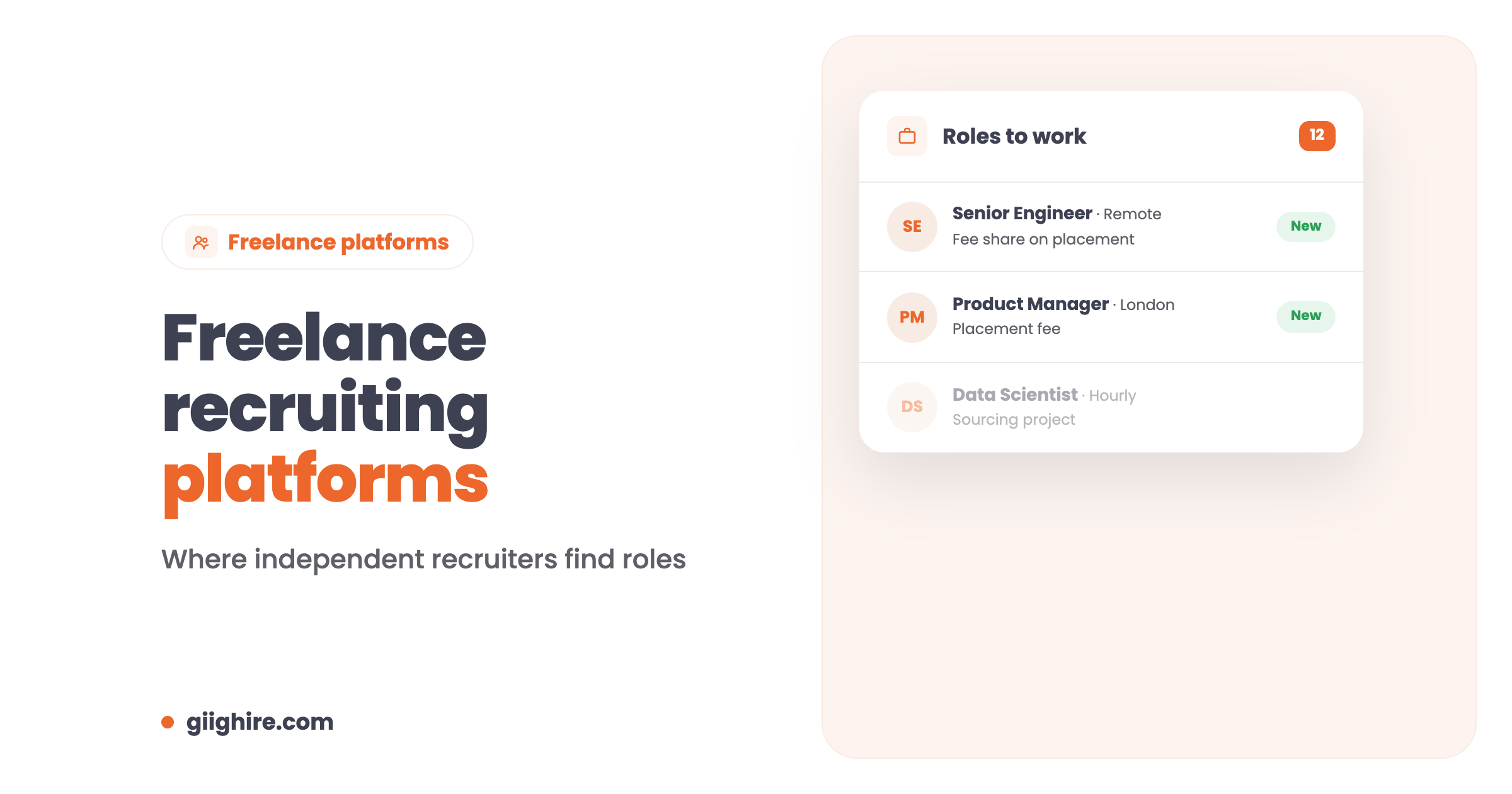
The best freelance recruiting platforms in 2026 are Paraform, RecruitiFi, Hunt Club, Upwork and Recruiter.com. Each one feeds independent recruiters roles to work, so you spend less time on business development. They work in different ways (marketplace roles, agency networks, hourly contracts), so pick the one that matches how you like to work and the clients you want.
A freelance recruiting platform is a website that connects independent recruiters with companies that need hiring help. Think of it as a source of work, not a replacement for your own clients. Most of the platforms below are US-focused, so if you’re UK-based, check which roles you can actually work before you sign up.
I’ve updated this list for 2026, because a few of the platforms we listed before have changed what they do or are hard to find now.
The best freelance recruiting platforms at a glance
Platform
What it is
Best for
Paraform
Marketplace of vetted recruiters working roles for hiring companies
Experienced recruiters, especially in tech
RecruitiFi
Managed marketplace that routes roles to a network of agencies
Small agencies wanting access to bigger employers
Hunt Club
Referral-driven network for senior searches
Well-connected recruiters in senior hiring
Upwork
Open freelance marketplace
Hourly sourcing, screening and project work
Recruiter.com
On-demand marketplace for contract recruiters
Recruiters who want contract or hourly work
1. Paraform
Paraform is a recruiting marketplace where vetted recruiters work roles for hiring companies, mostly in tech, and get paid a fee when they place someone.
Companies post roles with detailed briefs and hiring manager preferences, so you can skip a lot of the intake work. Payouts are a share of a success fee based on the hire’s salary. It’s selective, so expect to show a track record to get in.
Good for: experienced recruiters who want a steady flow of roles.
Think about: it’s selective and leans towards US tech roles.
2. RecruitiFi
RecruitiFi is a managed marketplace that connects employers with a large network of recruitment agencies on one standard contract.
Agencies build a profile showing their specialisms and placement history, and RecruitiFi suggests them for new roles. It’s funded by the agencies: RecruitiFi takes a small cut of the placement fee rather than adding to the client’s cost.
Good for: small agencies that want access to bigger employers without a long procurement process.
Think about: you’re giving up a slice of each fee.
3. Hunt Club
Hunt Club is a referral-driven network that focuses on senior and leadership hires, and recruiters are paid a placement fee.
Good for: well-networked recruiters who know senior talent.
Think about: it suits senior roles more than everyday hiring.
4. Upwork
Upwork is an open freelance marketplace where companies hire recruiters by the hour or for fixed-price projects like sourcing lists or screening.
It’s the most open option on this list. Anyone can create a profile and pitch for work, which means more competition and more variable rates.
Good for: building income from hourly sourcing, screening and project work, especially when you’re starting out.
Think about: price competition, and hourly work caps your earnings.
5. Recruiter.com
Recruiter.com is an on-demand marketplace for contract recruiters, with work priced hourly or by quote.
Good for: recruiters who want contract or hourly engagements rather than placement fees.
Think about: check what work is available in your region.
How to choose the right platform
Pick the platform that matches how you want to get paid and the roles you’re good at.
Your experience: selective marketplaces like Paraform suit proven recruiters; Upwork is easier to break into.
How you want to get paid: placement fees, a share of a fee, or hourly rates.
Your niche and region: many platforms lean towards US tech roles. Check the work matches what you recruit for.
Fees: most platforms take a cut. Work out what you’d actually keep from a typical placement.
Ownership: check who owns the client relationship if they want to hire again.
If you’re UK-based, don’t forget the networks where independent agencies trade roles with each other, such as split-fee networks and recruiter communities. They can be a good source of extra work in your niche.
Platforms find work. You still need somewhere to run it.
Platforms give you roles, but you still need somewhere to keep your candidates, notes and pipeline, especially once you’re working roles from your own clients and a platform at the same time.
That’s where Giig comes in. It isn’t a marketplace; it’s the recruitment CRM and ATS you run your desk from. Your candidates stay in your own database, so a candidate you find for a platform role is still there for your next client. The Free Forever plan covers one user with unlimited candidates, jobs and clients, plus jobs, interview and BD pipelines. Paid plans start at £14.99 per user/month +VAT, no contract, cancel anytime. Start with the free recruitment CRM.
Platforms are also a good way to fill the gaps while you build your own client base. Here’s how to sell recruitment services so you’re not relying on them forever.
Frequently asked questions
What is a freelance recruiting platform?
A freelance recruiting platform connects independent recruiters with companies that need hiring help. Some are marketplaces where you work roles for a placement fee, some route roles to agency networks, and some are open freelance sites where you’re paid hourly or per project.
What’s the best freelance recruiting platform?
It depends on how you work. Paraform suits experienced recruiters wanting a steady flow of mainly tech roles. RecruitiFi suits small agencies. Hunt Club suits senior search. Upwork and Recruiter.com suit hourly and contract work. Many freelancers use one platform alongside their own clients.
Do freelance recruiting platforms take a cut of the fee?
Most do. Some take a percentage of each placement fee, some charge the client and pay you a share, and open marketplaces like Upwork charge service fees. Work out what you’d actually keep from a typical placement before you sign up.
Can UK recruiters use these platforms?
Yes, but many lean towards US roles, so check what work is available in your region and whether you can legally recruit for the locations involved. Upwork is open worldwide. UK recruiters can also find extra work through split-fee networks and recruiter communities.
Should I rely on platforms for all my work?
No. Platforms are a useful extra source of roles, but they set the rules, take a cut and own the client relationship. Use them to fill gaps while you build your own clients, and keep every candidate in your own CRM.
Final thoughts
Freelance recruiting platforms are a handy way to get more roles without doing all the business development yourself. Pick one or two that match your niche and how you want to get paid, read the fee terms properly, and keep building your own client base alongside them.
Want your candidates in your own database, whoever the client is? Start on Giig for free. No credit card, no contract.
This website uses cookies so that we can provide you with the best user experience possible. Cookie information is stored in your browser and performs functions such as recognising you when you return to our website and helping our team to understand which sections of the website you find most interesting and useful.
Strictly Necessary Cookies
Strictly Necessary Cookie should be enabled at all times so that we can save your preferences for cookie settings.
If you disable this cookie, we will not be able to save your preferences. This means that every time you visit this website you will need to enable or disable cookies again.