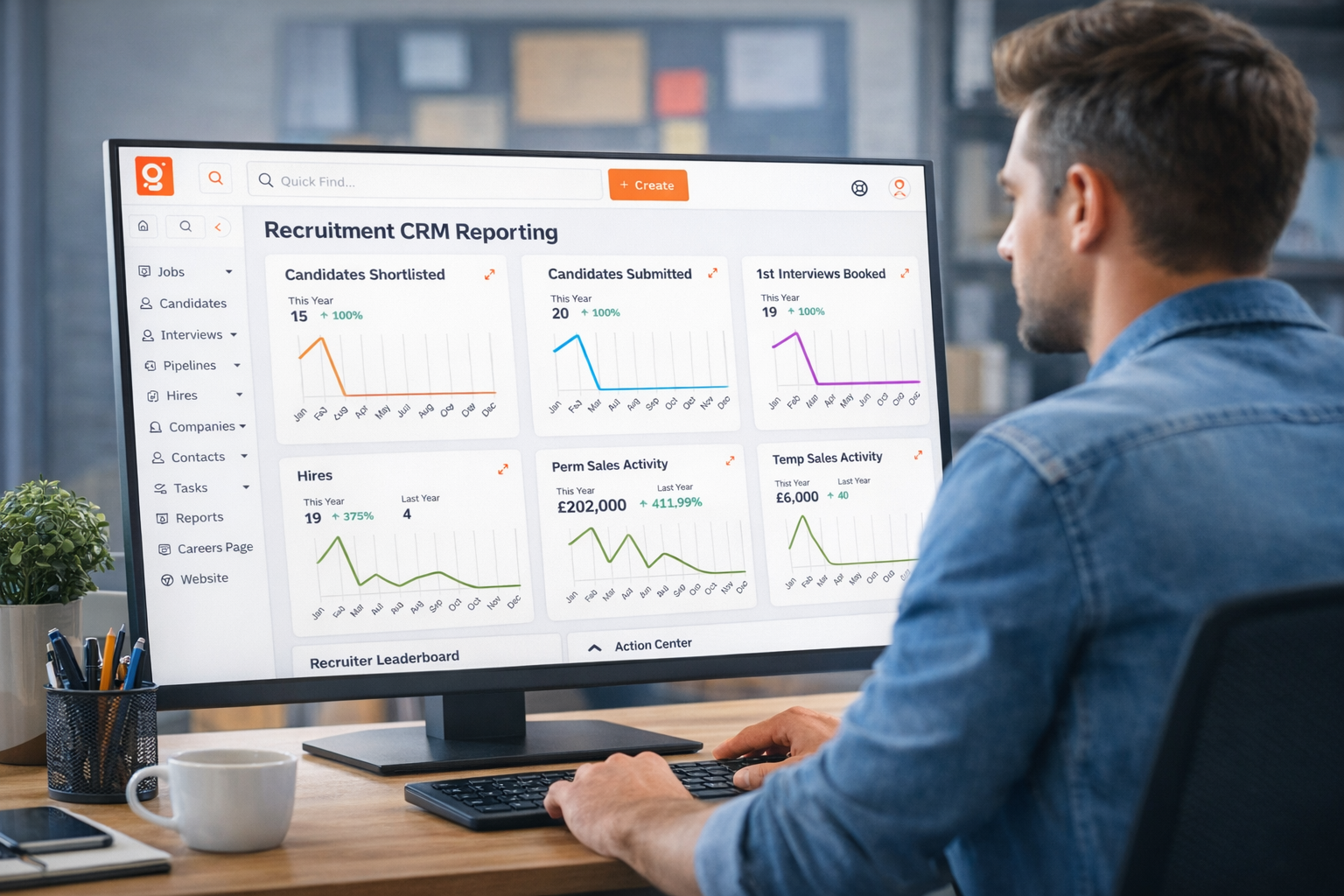
If you’re running a recruitment agency, you know how easy it is to get buried in candidates, clients, and placements. But the truth is, if you can’t see what’s happening in your business at a glance, you’re making decisions in the dark. That’s where recruitment CRM reporting comes in.
With the right tools, you can track your team’s performance, understand your pipeline, and make smarter decisions, without drowning in spreadsheets.
What Is Recruitment CRM Reporting?
At its core, recruitment CRM reporting is about turning your agency data into insights you can act on. From candidates and clients to team activity and revenue, reporting gives you a clear view of your business.
With it, you can quickly see:
- How many candidates are in each stage of the pipeline
- Which clients are engaging, or need a follow-up
- Revenue generated per recruiter or per role
- How your forecasts look for the month ahead
Instead of guesswork, you get a snapshot of exactly where your agency stands.
Why Agencies Struggle Without It
A lot of agencies skip proper reporting, thinking it’s too much admin. But without it, you risk:
- Missing important follow-ups with clients or candidates
- Overlooking bottlenecks in your recruitment process
- Struggling to forecast revenue or monthly targets
- Not knowing how your team is performing
In short, without recruitment CRM reporting, decisions are based on intuition, not facts, and that can slow your growth.
How Reporting Helps Your Agency Work Smarter
Good reporting changes everything. Here’s how:
- Track Performance Easily: Know which recruiters, roles, or clients are driving results.
- Spot Bottlenecks Quickly: See where candidates or roles are getting stuck.
- Forecast Revenue: Plan ahead with more accurate monthly predictions.
- Empower Your Team: When recruiters can see their own progress, they’re motivated and accountable.
- Keep Clients Happy: Proactively manage relationships instead of reacting to problems.
Giig Hire’s Advanced Reporting: Made for Small Agencies
Not every small agency has a dedicated analytics team, and that’s why Giig Hire built reporting that works for teams of all sizes. Even solo recruiters can get the same insights that larger agencies use, but in a way that’s simple and actionable.
With Giig Hire’s advanced reporting, your team can:
- Track monthly activity and performance at a glance
- See exactly where candidates are in the pipeline
- Identify which clients need follow-ups
- Forecast placements and revenue easily
- Use automated dashboards that save time and reduce admin
Its reporting made to give small agencies clarity, control, and confidence, without overcomplicating things.
How Internal Reporting Helps Recruiters Every Day
Internal reporting is one of the most practical ways your team can work smarter. Here’s how:
- Monthly Performance Tracking: Recruiters can see calls, emails, interviews, and placements in one place.
- Pipeline Visibility: Everyone knows which candidates are moving forward and where attention is needed.
- Client Activity Overview: See which clients haven’t been contacted recently and focus efforts where it matters.
- Forecasting & Targets: Predict which placements are likely to close and plan your week accordingly.
- Spot Bottlenecks Early: Dashboards highlight stuck candidates or roles, so corrective action can happen fast.
- Motivation & Accountability: Visual charts and clear data motivate recruiters to hit targets and help managers support the team.
Practical Tips to Make Reporting Work for You
- Focus on What Matters: Track metrics that impact revenue, client satisfaction, and recruiter performance.
- Automate Reports: Dashboards save time and reduce manual work.
- Review Regularly: Weekly or monthly check-ins help spot trends before they become problems.
- Take Action: Reporting is only useful if you act on the insights. Adjust workflows, priorities, or client outreach based on what you see.
Here’s a great article on 11 Effective Recruitment Strategies; however, there should be a twelfth… Reporting.
FAQs
Q: What is recruitment CRM reporting?
A: It’s using your CRM to track candidates, clients, and team activity so you can make smarter business decisions.
Q: Why is reporting important?
A: Without it, agencies risk making decisions based on guesswork, missing opportunities, and struggling to grow efficiently.
Q: Which metrics should I track?
A: Candidate activity, placements, client engagement, revenue per recruiter, and time-to-hire are key.
Q: Can small agencies benefit from reporting?
A: Absolutely. Even solo recruiters can use reporting to manage pipelines, hit targets, and forecast outcomes.
Q: How do I get started?
A: Start with a CRM like Giig Hire Recruitment Reporting Software.
Final Thoughts
Recruitment is fast-paced, and without clear insights, it’s easy to get behind. Recruitment CRM reporting gives your agency clarity, improves accountability, and helps you make decisions confidently.
With Giig Hire, even small agencies and solo recruiters can access advanced reporting that’s simple, actionable, and built to help your business grow, all without unnecessary complexity.